South African electric bus manufacturer sees rising demand amid high fuel costs

Gauteng Bus and Coach Centre (GBCC) finance head Dirk van der Merwe discusses some of the company's highlights over the past six months
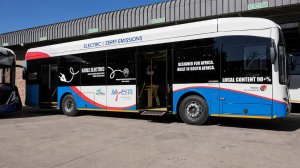


Following the launch of MyCiti’s first electric bus (e-bus), in Cape Town, last month, as well as the increasing diesel price, more bus operators have started inquiring about the possibility of adopting e-buses.
Bus manufacturer Gauteng Bus and Coach Centre (GBCC) finance head Dirk van der Merwe told Engineering News the e-buses being piloted by MyCiti were paving the way for increased confidence in the technology.
GBCC was selected as the local body manufacturer for the City of Cape Town’s 12-m-long Volvo BZRLE electric fleet. As previously reported in Engineering News, Cape Town is set to take delivery of 38 e-buses this year, with the first bus expected to start operating by July 1, 2027.
Following December 2025 regulation amendments, GBCC registered its assembly facility, in Johannesburg, Gauteng, with the International Trade Administration Commission of South Africa (Itac) to expand its offering to electric chassis assembly for fleet operators and municipalities.
With a focus on local content, the planned addition of electric chassis assembly will enable GBCC to further develop local skills and increase localisation, while also helping to lower the buying cost, as opposed to e-buses that are fully imported.
“Our objective is not simply to assemble buses locally, but to develop a South African manufacturing capability around the design, engineering and production of buses. Local content must translate into real local skills, engineering capability and value creation.” says GBCC CEO and founder Riaan Bouwer.
Van der Merwe noted that the change in Itac regulations could allow a saving of about 20% on the cost of an electric chassis for a local bus, where the chassis is imported in completely knocked down (CKD) form and assembled locally.
“Operators focus on the cost of a vehicle and the total cost of ownership. If we can reduce this for customers through local assembly, we can make e-buses more competitive against current diesel models,” Van der Merwe told Engineering News.
He explained that, while the cost of ownership for e-buses was an initial barrier to entry for bus operators, the recent high prices of diesel had led operators to start considering e-buses as a more viable alternative.
He noted, however, that one of the challenges hindering the adopting of e-buses was the change in refuelling infrastructure needed for operators.
“It will be quite a change in the way bus operators manage their fleets. People will need to monitor the vehicles and technology throughout the charging process.”
Meanwhile, Van der Merwe said that, while GBCC initially aimed to develop hydrogen fuel cell city buses for the South African market, the project had been deprioritised for now owing to the high cost of production and low hydrogen uptake internationally.
He noted that the company was rather focusing on diesel and e-buses and would continue to monitor hydrogen fuel cell mobility developments.
Van der Merwe added that the company was on track to meet its 2040 net zero goals and was looking to implement green energy solutions such as solar.
Moving forward, the company aims to scale e-bus manufacturing and CKD electric chassis assembly.
“The transition to electric mobility gives South Africa an opportunity to develop its own solutions rather than simply importing finished vehicles.
“We are designing and building electric bus bodies specifically for South African operating conditions, while ensuring that the engineering, safety, quality and performance standards are comparable with anything being produced internationally. Our ambition is to demonstrate that a bus designed and built in South Africa can meet international standards while being better suited to the conditions in which it will operate,” says Bouwer.
GBCC is also targeting Southern African Development Community (SADC) regional market expansion and expanding its after-sales and lifecycle support.
Established in 2019, GBCC is a South African bus manufacturer and mobility solutions provider specialising in bus body manufacturing, chassis assembly, refurbishment, remanufacturing, accident repair and lifecycle support services.
Operating from a manufacturing facility in Johannesburg, GBCC serves public transport authorities, municipalities, State-owned entities, private operators and international original-equipment manufacturers across South Africa and the rest of the SADC region.
Article Enquiry
Email Article
Save Article
Feedback
To advertise email advertising@creamermedia.co.za or click here
Projects
Latest Multimedia
Latest News
Showroom
We supply customers with practical affordable solutions for their testing needs. Our products include benchtop, portable, in-line process control...
VISIT SHOWROOM
SafeQuip is a leading distributor and manufacturer of fire safety solutions, offering a comprehensive range of products designed to meet all...
VISIT SHOWROOM
Press Office
Announcements
What's On
Subscribe to improve your user experience...
Option 1 (equivalent of R125 a month):
Receive a weekly copy of Creamer Media's Engineering News & Mining Weekly magazine
(print copy for those in South Africa and e-magazine for those outside of South Africa)
Receive daily email newsletters
Access to full search results
Access archive of magazine back copies
Access to Projects in Progress
Access to ONE Research Report of your choice in PDF format
Option 2 (equivalent of R375 a month):
All benefits from Option 1
PLUS
Access to Creamer Media's Research Channel Africa for ALL Research Reports, in PDF format, on various industrial and mining sectors
including Electricity; Water; Energy Transition; Hydrogen; Roads, Rail and Ports; Coal; Gold; Platinum; Battery Metals; etc.
Already a subscriber?
Forgotten your password?
Receive weekly copy of Creamer Media's Engineering News & Mining Weekly magazine (print copy for those in South Africa and e-magazine for those outside of South Africa)
➕
Recieve daily email newsletters
➕
Access to full search results
➕
Access archive of magazine back copies
➕
Access to Projects in Progress
➕
Access to ONE Research Report of your choice in PDF format
RESEARCH CHANNEL AFRICA
R4500 (equivalent of R375 a month)
SUBSCRIBEAll benefits from Option 1
➕
Access to Creamer Media's Research Channel Africa for ALL Research Reports on various industrial and mining sectors, in PDF format, including on:
Electricity
➕
Water
➕
Energy Transition
➕
Hydrogen
➕
Roads, Rail and Ports
➕
Coal
➕
Gold
➕
Platinum
➕
Battery Metals
➕
etc.
Receive all benefits from Option 1 or Option 2 delivered to numerous people at your company
➕
Multiple User names and Passwords for simultaneous log-ins
➕
Intranet integration access to all in your organisation